
Your air conditioner started making that weird clicking noise three days ago. You told yourself it would go away. Now it's 85 degrees in your Woodbridge home at 9 PM, and you're staring at a dead system. I've been in hundreds of Northern Virginia homes over the past 20 years, and this scenario plays out every summer. The warning signs were there, but most homeowners don't know what to look for until it's too late.
Here's the reality about HVAC systems in Woodbridge: our humid summers and fluctuating spring temperatures put serious stress on cooling equipment. Add in the clay soil that shifts foundations and affects ductwork, plus homes built in different decades with varying insulation standards, and you have unique repair challenges. Understanding these local factors and recognizing early warning signs can save you thousands in emergency repairs and keep your family comfortable year-round.
Let's be honest about what's actually happening in your HVAC system before it fails completely. The signs are always there, and once you know what to watch for, you'll never miss them again.
What Are the Most Common HVAC Warning Signs?
The five most critical HVAC warning signs are inconsistent temperatures between rooms, unusual noises during operation, higher than normal energy bills, poor air quality, and frequent cycling on and off. These symptoms often appear weeks or months before complete system failure, giving you time to address issues before they become expensive emergencies.
Inconsistent temperatures throughout your home indicate problems with your ductwork, refrigerant levels, or system sizing. If your master bedroom stays 5 degrees warmer than your living room despite identical thermostat settings, you likely have airflow restrictions or duct leaks. This forces your system to work harder and increases wear on components.
Unusual noises tell specific stories about your system's condition. Grinding sounds typically indicate motor bearing problems. Squealing suggests belt issues. Clicking during startup could mean electrical problems. Banging or clanking often points to loose components or debris in the system. Each sound has a different urgency level and repair cost.
Energy bills that increase 15-20% without explanation signal declining system efficiency. Your HVAC system accounts for 40-50% of your home's energy use. When components start failing, the system compensates by running longer and working harder. A sudden spike in your Dominion Energy bill often precedes complete system failure by 30-60 days.
Poor indoor air quality manifests as increased dust, musty odors, or family members experiencing more allergies. This often indicates problems with your air filtration system, ductwork contamination, or humidity control issues. In Woodbridge's humid climate, these problems can escalate quickly into mold and health concerns.
How Do You Know When Repair vs Replacement Makes Sense?
The general rule is if repair costs exceed 50% of replacement cost and your system is over 10 years old, replacement makes more financial sense. However, the decision involves several factors including system age, repair history, energy efficiency, and your long-term plans for the property.
System age plays the most critical role in repair versus replacement decisions. HVAC systems in Northern Virginia typically last 12-15 years with proper maintenance. If your system is under 8 years old, repairs almost always make sense unless you're facing major component failure like a cracked heat exchanger. Systems between 8-12 years require careful evaluation of repair costs versus remaining lifespan.
Repair history provides crucial insight into future reliability. If you've spent more than $500 annually on repairs over the past three years, your system is telling you something. Multiple repairs indicate cascading component failures, where fixing one problem leads to stress on other parts. This creates an expensive cycle that only replacement truly solves.
Energy efficiency impacts your decision beyond just comfort. Older systems operate at 60-70% efficiency compared to modern systems that achieve 90%+ efficiency. A system that costs $200 monthly to operate could be replaced with one costing $120 monthly. Over five years, those energy savings can offset a significant portion of replacement costs.
Consider your timeline for staying in your Woodbridge home. If you're planning to sell within two years, strategic repairs might make sense. If this is your long-term home, investing in a new, efficient system provides years of reliable comfort and lower operating costs. The key is calculating total cost of ownership, not just upfront repair expenses.
What HVAC Problems Are Unique to Woodbridge Homes?
Woodbridge homes face specific HVAC challenges due to clay soil foundation shifts, varying construction standards across different neighborhoods, and Northern Virginia's humidity levels that stress cooling systems. Understanding these local factors helps homeowners identify problems early and make informed repair decisions.
Clay soil movement affects ductwork integrity more than most homeowners realize. Woodbridge sits on expansive clay that swells and contracts with moisture changes. This ground movement can separate duct joints, create air leaks, and even damage exterior unit pads. I've seen systems lose 30% efficiency simply due to disconnected ducts in crawl spaces. Annual duct inspections prevent these hidden problems from escalating.
Construction standards vary significantly across Woodbridge neighborhoods built in different decades. Homes from the 1970s-1980s often have undersized ductwork and minimal insulation. Newer developments may have proper duct sizing but inconsistent installation quality. These variations affect system performance and create unique repair needs based on your specific neighborhood and home age.
High humidity levels during Northern Virginia summers place extra strain on air conditioning systems. Your AC must remove moisture from indoor air while cooling, requiring more energy and creating wear on components. Systems not properly sized for local humidity conditions struggle to maintain comfort and experience premature failure of compressors and coils.
Proximity to major highways and development creates additional air quality challenges. Dust infiltration increases filter replacement frequency and system cleaning needs. Indoor air quality solutions become more critical for Woodbridge homes than rural locations. These factors influence both repair frequency and maintenance requirements specific to your local environment.
How Much Should You Budget for HVAC Repairs?
Annual HVAC maintenance and minor repairs typically cost $200-500 for Woodbridge homeowners, while major component replacements range from $800-3,000 depending on the system age and problem severity. Planning for these expenses prevents financial stress when repairs become necessary.
Preventive maintenance represents the best value in HVAC spending. Annual tune-ups cost $150-200 but prevent 70% of emergency repairs. During maintenance visits, technicians identify small problems before they cause system failures. Replacing a $50 capacitor during scheduled maintenance beats a $300 emergency service call when your system fails on a 95-degree day.
Common repair costs break down into predictable categories. Electrical component failures like capacitors and contactors typically cost $150-300. Refrigerant leaks and recharging run $400-800. Blower motor replacements range $500-1,200. Compressor failures, the most expensive single component, cost $1,500-3,000 depending on system size and refrigerant type.
Emergency service calls always cost significantly more than planned repairs. After-hours and weekend rates typically add 50-100% to standard pricing. Parts availability becomes limited, potentially extending uncomfortable conditions. Planning repairs during moderate weather saves money and ensures better service availability.
Smart homeowners budget $300-500 annually for HVAC expenses including maintenance and minor repairs. This creates a maintenance fund that covers routine expenses without budget stress. When major repairs arise, having this fund plus financing options like our 0% financing for 25 months makes the decision process easier. Get a free estimate to understand your system's current condition and potential repair needs.
What's the Step-by-Step HVAC Repair Process?
Professional HVAC repair follows a systematic diagnostic process: initial system assessment, problem identification, cost estimation, repair execution, and final testing. Understanding this process helps homeowners know what to expect and ensures they receive thorough service.
- Initial System Assessment: The technician examines your entire HVAC system, not just the immediate problem. This includes checking electrical connections, measuring refrigerant pressures, testing airflow, and inspecting ductwork accessibility. Comprehensive assessment identifies multiple issues that could affect repair success.
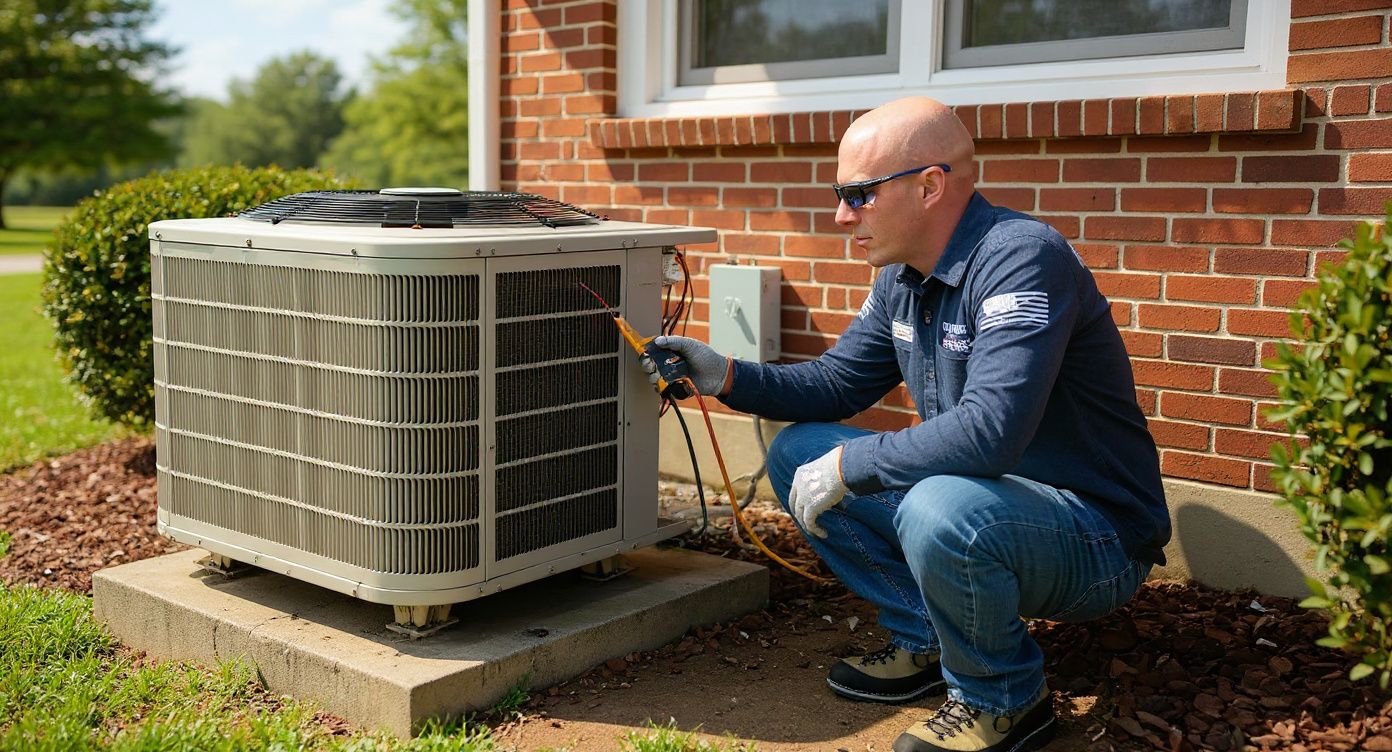
- Problem Diagnosis: Using specialized tools and experience, technicians pinpoint the exact failure cause. This might involve electrical multimeter testing, pressure measurements, or visual inspection of components. Accurate diagnosis prevents unnecessary part replacements and ensures effective repairs.
- Repair Cost Estimation: You receive a detailed breakdown of parts, labor, and any additional work needed. Quality contractors explain why specific repairs are necessary and provide options when multiple solutions exist. This transparency helps you make informed decisions about proceeding.
- Repair Execution: Skilled technicians complete the work using proper tools and genuine parts. Professional repairs include safety checks, system cleaning if needed, and proper testing of all functions. Quality workmanship ensures repairs last and don't create additional problems.
- Final System Testing: After repairs, technicians run complete system cycles to verify proper operation. This includes checking temperatures, airflow, electrical connections, and safety controls. Thorough testing prevents callbacks and ensures your system operates reliably.
The entire process typically takes 2-4 hours for common repairs, though complex issues may require multiple visits. Transparent communication throughout each step ensures you understand what's happening and why specific repairs are necessary. Professional AC repair services follow these steps consistently to deliver reliable results.
Why Choose Air Force One Heating & Cooling?
Air Force One Heating & Cooling delivers reliable HVAC repair services with transparent pricing, expert diagnosis, and guaranteed workmanship that Woodbridge homeowners can trust. Our 20 years of Northern Virginia experience means we understand local climate challenges and home construction variations that affect your HVAC system.
Real people answer our phone every time you call (202) 246-6999. No phone trees, no hold times, no frustrating automated systems. When your HVAC system fails, you need immediate help, not a maze of menu options. Our direct communication approach reflects our military-inspired commitment to reliable service when you need it most.
Honest pricing and transparent estimates eliminate surprise costs. We provide detailed breakdowns of parts and labor before starting work. No hidden fees, no upselling unnecessary services, no pressure tactics. Our 5-year labor warranty and 10-year equipment warranty back up our commitment to quality workmanship that lasts.
One-hour appointment windows and on-time arrival respect your schedule. We understand that waiting around all day for service creates additional stress during HVAC problems. Our scheduling system provides specific arrival times, and we communicate proactively if any delays occur.
As a Bryant Authorized Dealer, we maintain access to genuine parts and factory training that ensures proper repairs. Our 0% financing for 25 months makes major repairs affordable without compromising your family's comfort. Book online or call directly for immediate assistance with your Woodbridge HVAC repair needs.
The Bottom Line
Here's what matters: HVAC warning signs like inconsistent temperatures, unusual noises, and higher energy bills always appear before complete system failure. Recognizing these early indicators and addressing them promptly prevents expensive emergency repairs and keeps your Woodbridge home comfortable year-round.
Need HVAC help? Call Jim directly at (202) 246-6999. Real people answer the phone. Or get a free estimate online.
Frequently Asked Questions
How often should HVAC systems be serviced in Woodbridge?
Annual professional maintenance is essential for Woodbridge's humid climate and clay soil conditions. Spring tune-ups prepare cooling systems for summer stress, while fall maintenance ensures heating reliability. Some homes benefit from bi-annual service depending on system age and usage patterns.
What's the average lifespan of HVAC systems in Northern Virginia?
Well-maintained systems typically last 12-15 years in Northern Virginia's climate. Factors like installation quality, maintenance frequency, and local environmental conditions affect longevity. Systems with regular professional care often exceed 15 years, while neglected units may fail after 8-10 years.
Can homeowners perform any HVAC maintenance themselves?
Homeowners can safely change air filters monthly, keep outdoor units clear of debris, and ensure vents remain unobstructed. However, refrigerant work, electrical repairs, and internal component cleaning require professional training and licensing. DIY attempts often void warranties and create safety hazards.
How do you choose between repair and replacement for older systems?
Consider the 50% rule: if repair costs exceed 50% of replacement cost and your system is over 10 years old, replacement typically provides better long-term value. Factor in energy efficiency improvements, repair history, and your timeline for staying in the home when making this decision.
What financing options are available for HVAC repairs and replacements?
Air Force One Heating & Cooling offers 0% financing for 25 months on qualifying repairs and replacements. This allows homeowners to address HVAC issues immediately while spreading costs over affordable monthly payments. Additional financing terms may be available for larger projects.
Get Your Free Instant Estimate
Find out what your HVAC project will cost in 60 seconds. No obligation, no pressure.